Wellness Kids Can Name and Teens Can Trust
In today’s society, I used to have a tough time speaking to kids and telling them how to “succeed” in life. I don’t have any kids of my own and my nieces and nephews have grown up, so it’s difficult speaking to today’s youth. Especially now that the lingo is different and what they are into is different. Everything is just different. They have a lot more options than I did when I was there age. I mean, there are always the tried and true usual sayings like “be well, be calm, be confident, be resilient,” just like it was written in a book called “How to succeed.” That’s all well and good, but unfortunately, I’ve never actually read that particular book. And then my life’s focus began to change and start focusing on the day-to-day and the moment-to-moment wins through mindful awareness. How to succeed in the public’s eye and their definition of it maybe foreign to me, but what I do know is that mindful awareness starts somewhere much smaller. And what I have learned in my older age to pass down is that sometimes things aren’t created as or introduced to us as obstacles just to be “fixed.” Sometimes it’s just there to notice.
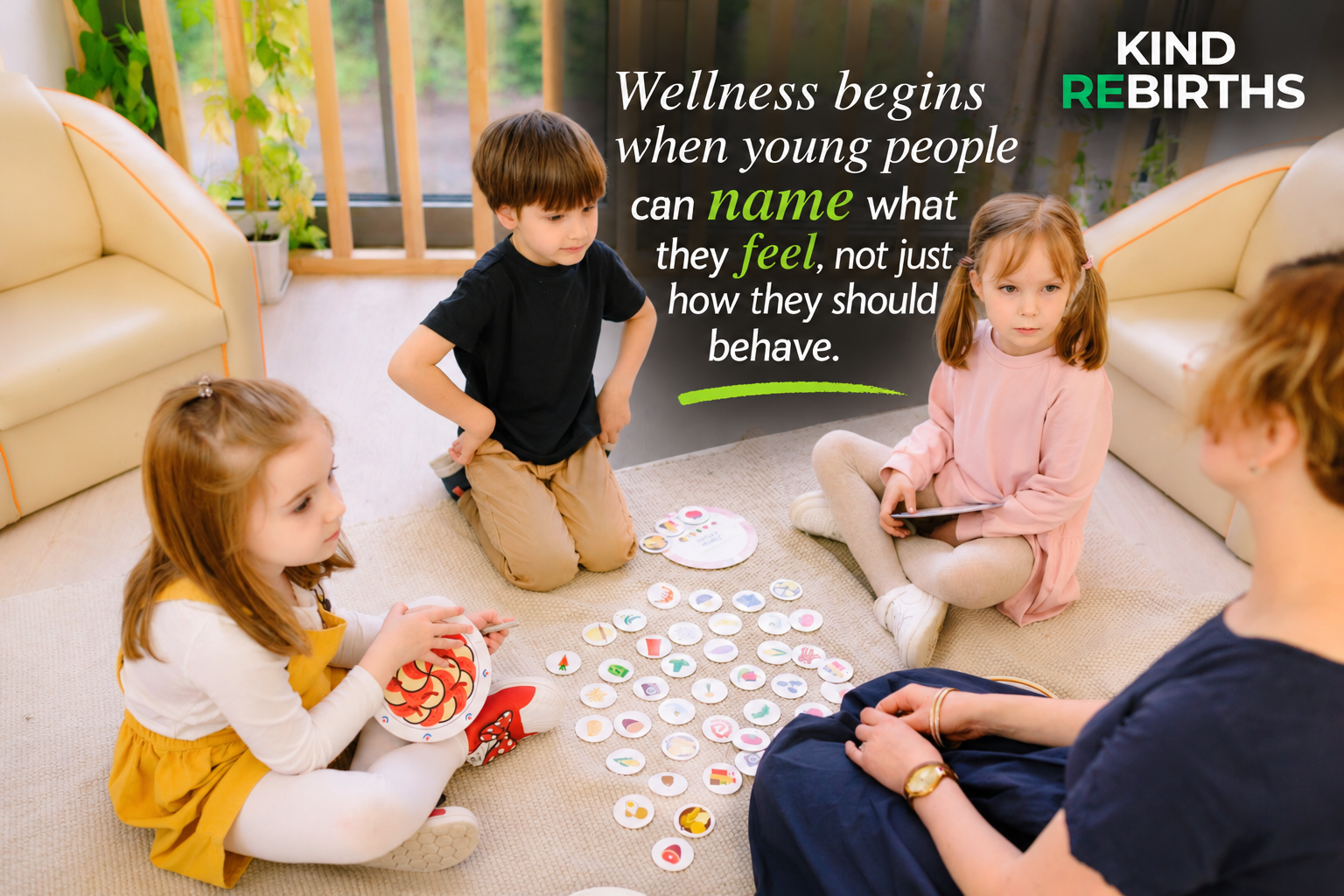
When we look at younger children, the idea of wellness can begin with something super simple: giving a name to what they feel they are experiencing. If we can successfully help a child recognize the difference between being angry and disappointed, that is a first step to introducing the concept of mindfulness. Can you picture how significant and beneficial having a young child to be able to start developing the vocabulary and an understanding of what is happening in that moment rather than how they should interpret it or what they should feel? For example, remember the kids in PE class who didn’t want to participate and then being labeled as uncooperative, reluctant, or maybe disengaged? And those are on the good end of the spectrum. Many times, they were labeled as insubordinate, disobedient, or noncompliant. What if at an early age, they were able to tell you I don’t feel comfortable doing XYZ because student A makes fun of him or her each time it’s their turn?
For teenagers, maybe the strategy is a little different. You know teens are a tough bunch, especially when they don’t know you well enough to trust you. With that in mind, you already know they don’t want another set of rules handed down to them. They are already being told how they should look, how they should perform in certain situations, and what they need to do in order to find “success” (yep, there’s that word again). So, we shouldn’t expect them to gravitate to the idea of having more expectations placed on them. Rather, we should spend time talking with them maturely about which expectations they recognize as their own, those of their parents, and then those from society.
Teens feel pressure easily. What job they should have, how they need to dress, and how to be an upstanding citizen is part of the adult handbook, I think. It’s relentless. On top of these and many other expectations, they then have to carry the cross of social media which is always telling them they need more. That’s why learning the language at an early age, the language that helps them distinguish between being personally fulfilled and what the approval of others demand. Wellness is a gift that let’s younger souls explore who they are without a feeling of obligation to those who think we always need more.
Our responsibility as adults can’t be to always have the answer. It’s impossible, yet it’s unnecessary. To reiterate, a portion of wellness is about identity and perspective. Mindfulness is about reflecting on the experiences that encourage the curiosity that’s needed. This is especially fragile when working with young and still developing minds. As such, wellness needs something more relatable to connect to their every day lives.
I don’t know half as much as I should and I certainly don’t know the world’s secrets. But I do know the value and significance of awareness. It’s probably one of the greatest gifts I can pass on to our youth. I hope I, like you, are able to convey to them that they don’t need to be a certain age to discover who they are. Further, they don’t need to become someone or something else to appreciate who they are meant to become.
Stay Mindful…
Rebirth